HNRS301 Global Engagement:
Spring 2024: Field Experience from May 14 – 28
Course Description:
This course examined contemporary global environmental and social crises though an examination of the environments, societies, and politics of East Asia. The class involved regular class meetings and coursework throughout the semester (classes met at 10am on Tuesdays/Thursday), followed by a field experience in Japan and neighboring countries in May of 2024.
Many of the social and environmental problems or our age – like climate change, political instability, national rivalries, war, resource use, food production, habitat protection, pollution, hazard mitigation, and sustainability planning – are framed as ‘global’ problems. Global problems, however, arise from actions that occur in particular places and then entwine in complex ways. Furthermore, these global problems are usually experienced, interpreted, and managed locally according to the resources, geographical particularities, political systems, and cultural practices of a place.
This course aims to introduce students to the international dimensions of global environmental and social problems by comparing and contrasting the ways in which individuals, governments, companies, and social movements in the Asia-Pacific region cope with similar issues, but come up with quite different solutions for creating a more peaceful and sustainable world. Through this course, students will gain not only a more nuanced understanding of global problems, but also learn about practical and innovative strategies people are using around the world to tackle them.
This course will specifically focus on four aspects of the culturally and geographically specific ways that environmental and social problems are experienced and approached:
1. We will compare different methods for creating sustainable communities by examining government-coordinated, high technology-driven approaches in China. This will be accomplished through visits to the Shanghai Urban Planning Exhibition Center, Pudong New Area, and Century Park. These approaches will then be contrasted with more market-oriented approaches in Japan and Korea, as well as human-centered approaches to sustainability based on nuanced local knowledge of environments in both Japan and Korea.
2. We will also have the opportunity to study dynamic earth processes like earthquakes, volcanos, tsunamis, typhoons, and floods so as to better understand the serious implications these have on long-term plans for sustainability and human security when they dislocate people, destroy infrastructure, and cause widespread contamination. We will examine this through visits to tsunami damaged areas in Japan, polluted areas of China, the Demilitarized Zone between North and South Korea, and areas adjacent to the damaged Fukushima Daiichi Nuclear Plant. Furthermore, we will be able to examine vulnerable sites where different aspects of climate change such as sea level rise, spatially shifting habitats, and rising temperatures and acidity in the oceans can exacerbate existing natural hazards and create new ones. This will be facilitated by visits to seashore and mountainous landscapes in Japan and low-lying urban areas in China.
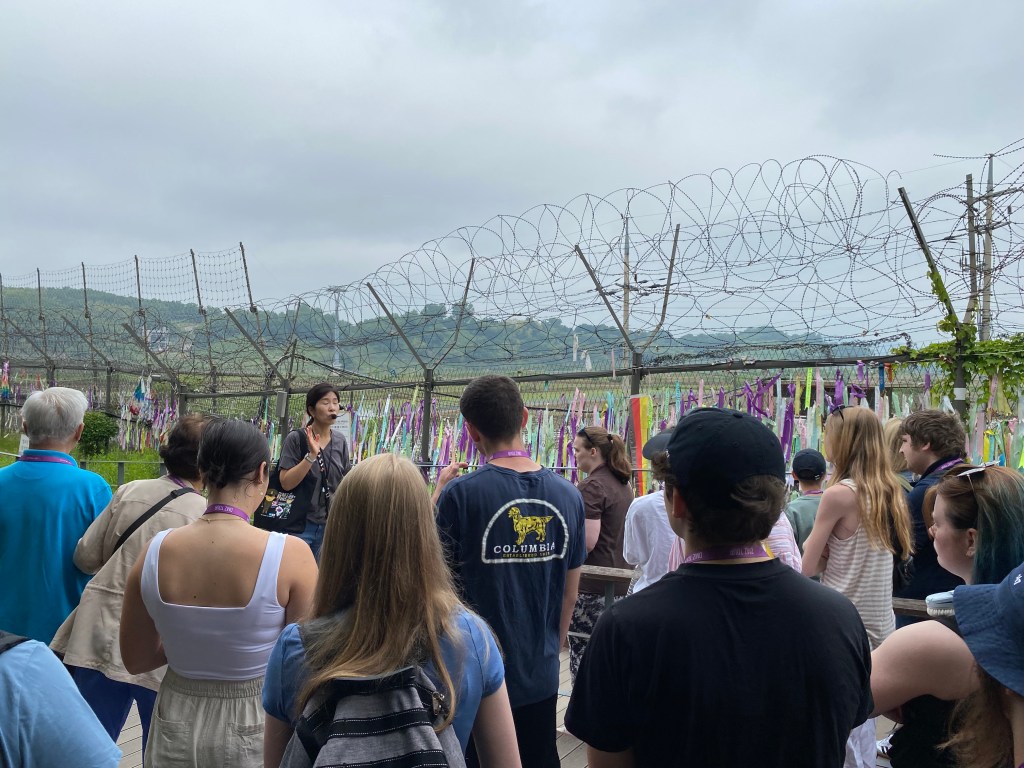
3. In this course students will also examine the impacts of militarization and national security doctrines of the U.S. and Asian powers through readings on the geopolitical rivalries in the Asia-Pacific region as well as visits to places affected by war and military deterance. These visits will include experiences in the Korean Demilitarized Zone as well as in museums and memorials commemorating the nuclear attack in Hiroshima, Japan.
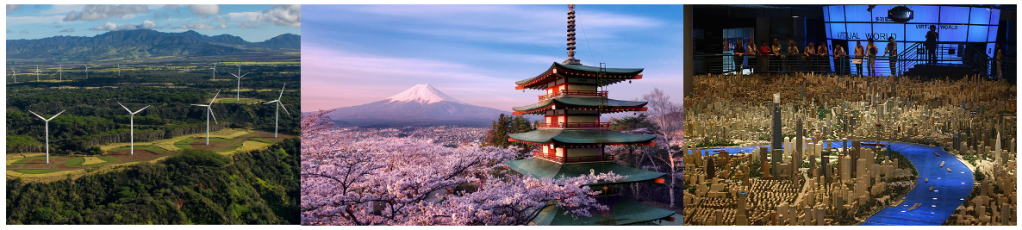
4. Lastly, we will explore how different kinds of landscape modification are deemed to be acceptable (or not) based on different social norms, perceptions of tolerable risk, attitudes towards the sacredness of different places, and cultural expectations for how humans should interact with the ecologies in which they live. Specifically, we will look at how people in different places view the acceptability of building non-carbon emitting energy facilities like windmills, geothermal plants, and nuclear reactors. We will also visit parks and gardens – both traditional and modern – in Japan, Korea, and China to compare and contrast the different techniques that are used to mold and modify ‘natural’ areas for functional, religious, and aesthetic reasons.
Spring 2024
Itinerary
Days 1 and 2 – be at Boston Airport Terminal E – by 11:45pm – for early 1:45am flight to Tokyo via Hong Kong (on Cathay Pacific Airlines).
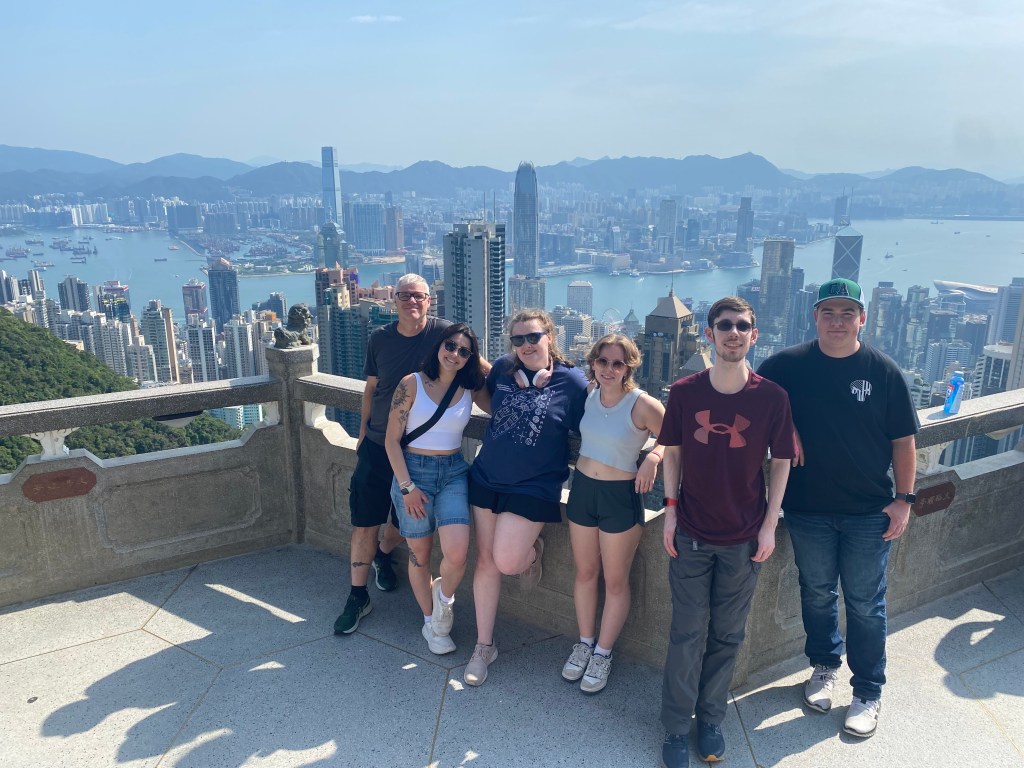
Day 3. Half-day in Hong Kong (arrive 5am local time for 11 hour layover). Get out of airport and into city. Fly to Tokyo in the afternoon. Arrive Haneda Airport 9:30pm. Hotel in Kamata area of Tokyo.
Day 4 – Day to acclimate and explore Tokyo. Hotel in Kamata area of Tokyo.
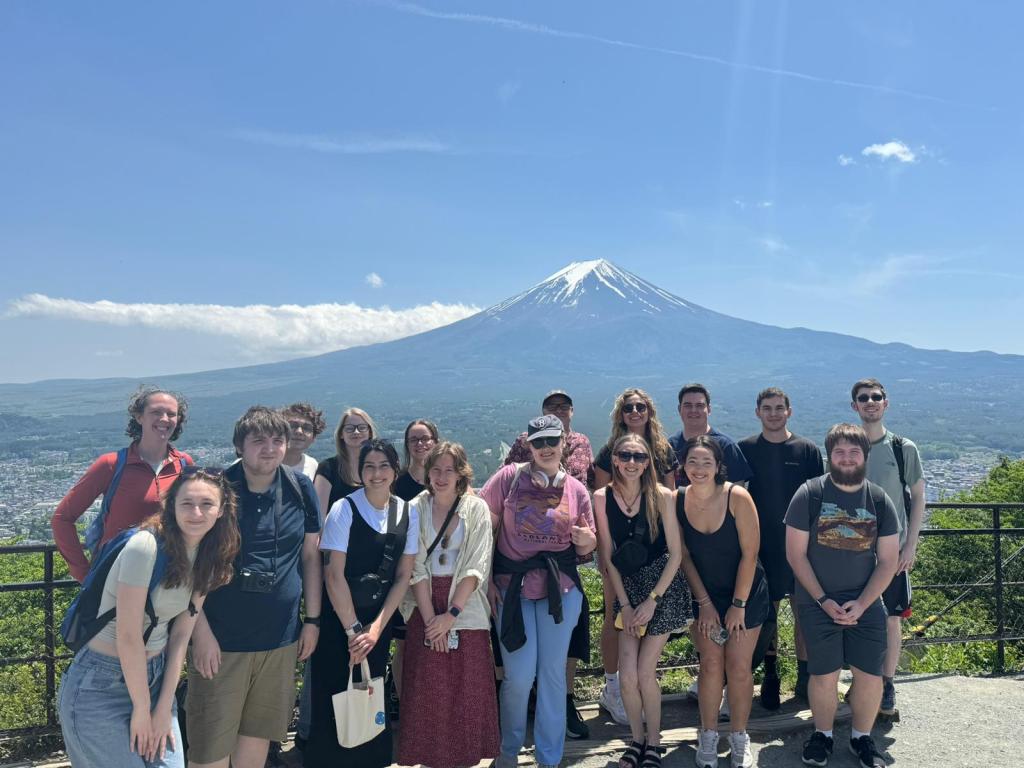
Day 5 – Day trip to Kawaguchiko / Mt Fuji area. Hotel in Kamata area of Tokyo.
Day 6 – Day trip to Fukushima. Hotel in Kamata area of Tokyo.
Day 7 – Shinkansen Bullet Train to Kyoto. Temples and sites. Hotel Kyoto
Day 8 – Day in Kyoto. Nanzen-ji. Hotel Kyoto
Day 9 – morning Shinkansen to Hiroshima, memorials of nuclear attack and museums. Hotel in Hiroshima
Day 10 – morning Shinkansen to Fukuoka Airport. Fly to Seoul (Incheon Airport). Hotel in Seoul.
Day 11 – Visit DMZ and border of North Korea. Hotel in Seoul.
Day 12 – Day in Seoul. Cheonggyecheon River Restoration project area. Hongdae District. Hotel in Seoul.
Day 13 – Fly to Shanghai (Pudong Airport). Visit the Bund (Huangpu riverfront) in the evening.
Day 14 – Shanghai Urban Planning Exhibition Center, other Shanghai attractions
Day 15 – Depart Shanghai and fly to Boston via Hong Kong. Arrive in Boston at 10:20pm.
Other information about class & trip:
The class will count as 4 credits of HNRS-301 and these credits will be attached to the Spring 2024 semester (and therefore the cost of the credits will be covered by regular full-time tuition as long as these 4 credit are part of a normal semester course load between 12-20 credits)
Course Fee: There is a course fee of $3990 to cover trip costs. – However, honors students are automatically eligible for substantial grants that will cover $3040 of this course fee. This means that the effective course fee for honors students will be just $950. This course fee will be added to participants’ Cost of Attendance for the spring semester and appear on the Spring Tuition bill. Because the course fee is part of the ‘Cost of Attendance’ it means that students can use available financial aid options to help cover this fee.
The course fee covers:
- Transportation from Keene to Boston Airport (if needed. Some students may live closer to Boston and therefore meet the group at the airport prior to departure).
- Airfare from Boston to all destinations and back.
- Transportation while in Asia: such as long-distance trains, and public transit in cities.
- All accommodation expenses on the trip (accommodations will be hotels where students will share a room with 1 or 2 other students depending on the size of the room).
- All activities (tour fees, museum entrance fees, etc).
What is NOT covered by the course fee: Students will cover their own food expenses on the trip individually. We will be staying in hotels that generally will not have cooking facilities so most food will be bought from restaurants and small stores (‘konbinis’). $50 per day is a good estimate for covering all meals and incidentals (so an estimate of $750 for the whole trip).
Also students are responsible for acquiring a passport before the trip if they do not already have one. Passports must be valid for at least 6 months beyond the trip dates (until end of November 2024) – some countries require this. Currently passport fees for new passports total $165 and you should apply for a passport well in advance of the trip. For details see:
https://travel.state.gov/content/travel/en/passports/how-apply.html
Please contact the instructor Sasha Davis by email if you have any questions
 Sasha Davis Projects