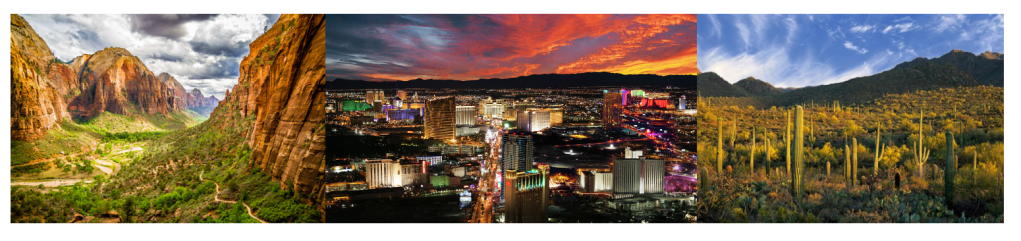
This course involves critical academic analyses of Natural Resource Management, Regional and International Migration, Outdoor Recreation and Tourism Management, Indigenous Issues, as well as an examination of the Physical and Cultural Landscapes of the Southwest United States. Participants will register for the class as a spring semester course and travel is scheduled for right after the end of the semester in May.

Course Themes:
The material and assignments for this field course are arranged into 5 themes:
1. Physical Geography and Ecology: Geology (sedimentary, volcanoes, basin and range topography) desert flora and fauna, effects of elevation, rain shadows, and micro-climates.
2. Indigenous History and Governance: Regional Indigenous history, contemporary governance of Native American lands, current issues in Southwest Indigenous communities.
3. Natural Resource Management: Water and river use issues, environmental contamination, land use controversies, national park and forest land conservation policies, radical environmental movements.
4. Movements and Migrations: Waves of migration, immigration policies, border militarization, urban growth, and contemporary ethnic mosaics of the Southwest.
5. Tourism and Economic Development: History of Las Vegas, National Park tourism, economic impacts from tourism, ‘Gateway’ communities outside National Parks.
Planned Travel Itinerary
Day 1: Day 1 –Fly to Boston to Phoenix. Desert ecologies and development on the wildland/urban interface. Camp in Sonoran Desert in Cave Creek, AZ.
Day 2: Elevation, precipitation, and landscape change. Jerome, Verde Valley, Sedona. Camp in Oak Creek Canyon, AZ.
Day 3– Morning hike in Sedona (Chicken Point). Go to Flagstaff via Oak Creek Canyon. Microclimates, volcanoes, indigenous settlement of the area, fires and national forest land use issues. Hotel in Flagstaff, AZ.
Day 4 – Go to Grand Canyon via Williams. Route 66 history. Tourism development. Camp at Grand Canyon Village, AZ.
Day 5– Grand Canyon hike (Bright Angel). Camp at Grand Canyon Village, AZ.
Day 6 – Drive from Grand Canyon to Diné (Navajo) Reservation and Hopi mesas. Legacies of uranium mining and histories of Native American dispossession and resistance. Stay at Tséyi’ Diné Heritage Area – Cottonwood Campground by Canyon de Chelly National Park, AZ.
Day 7 Drive from Canyon De Chelly to Antelope Canyon and Glen Canyon Dam. Water issues in the West. Hotel in Page, AZ.
Day 8 – Grand Staircase/Escalante National Monument . Land use and reductions of National Monuments. Camping at Kodachrome Basin, UT.
Day 9– Bryce Canyon NP. Tourism development and overuse. Camp in Zion NP, UT.
Day 10 Spend day inZion Canyon. Drive to Las Vegas. Differences between deserts. Population growth in the sunbelt. hotel in Las Vegas, NV.
Day 11 – Nuclear Testing Museum. hotel in Las Vegas, NV.
Day 12 – Drive to Pacific Ocean via Kelso and Skull Rock Trail in Joshua Tree. Hotel in Oceanside, CA.
Day 13 – leave Oceanside at 8am. Drive to border area in Calexico, cross into Mexicali at 10:30am. Leave Mexicali at 1pm. Leave Calexico at 2. Stay at Cottonwood Oasis in Joshua Tree NP.
Day 14 – Wake in Joshua Tree and drive to Phoenix. Wrap-up dinner in Phoenix. Evening plane departure. (overnight flight)
Day 15 (Memorial Day) – arrive early morning in Boston.
There is a course fee of $2000 (that is in addition to regular spring tuition) and will cover airfare from Boston to Phoenix; as well as all lodging, transportation, entrance fees, and activities in the Southwest. Students will be responsible for their own food purchases on the trip however. The course fee will be added to the student’s cost-of-attendance and put on the spring tuition bill which is due in December. This means financial aid can be applied to the course fee. Honors students typically receive a grant which covers a substantial portion of the fee.
 Sasha Davis Projects